A few occasional pimples and persistent inflammatory breakouts are not the same problem. Yet people often treat all Acne with the same face wash, home remedy, or over-the-counter cream.
When breakouts keep returning, leave dark marks, become painful, or begin causing scars, identifying the acne pattern becomes increasingly important.
Acne can appear in several forms
Acne develops when hair follicles and sebaceous glands become involved in a process that includes oil production, follicular blockage, inflammation, and microbial factors.
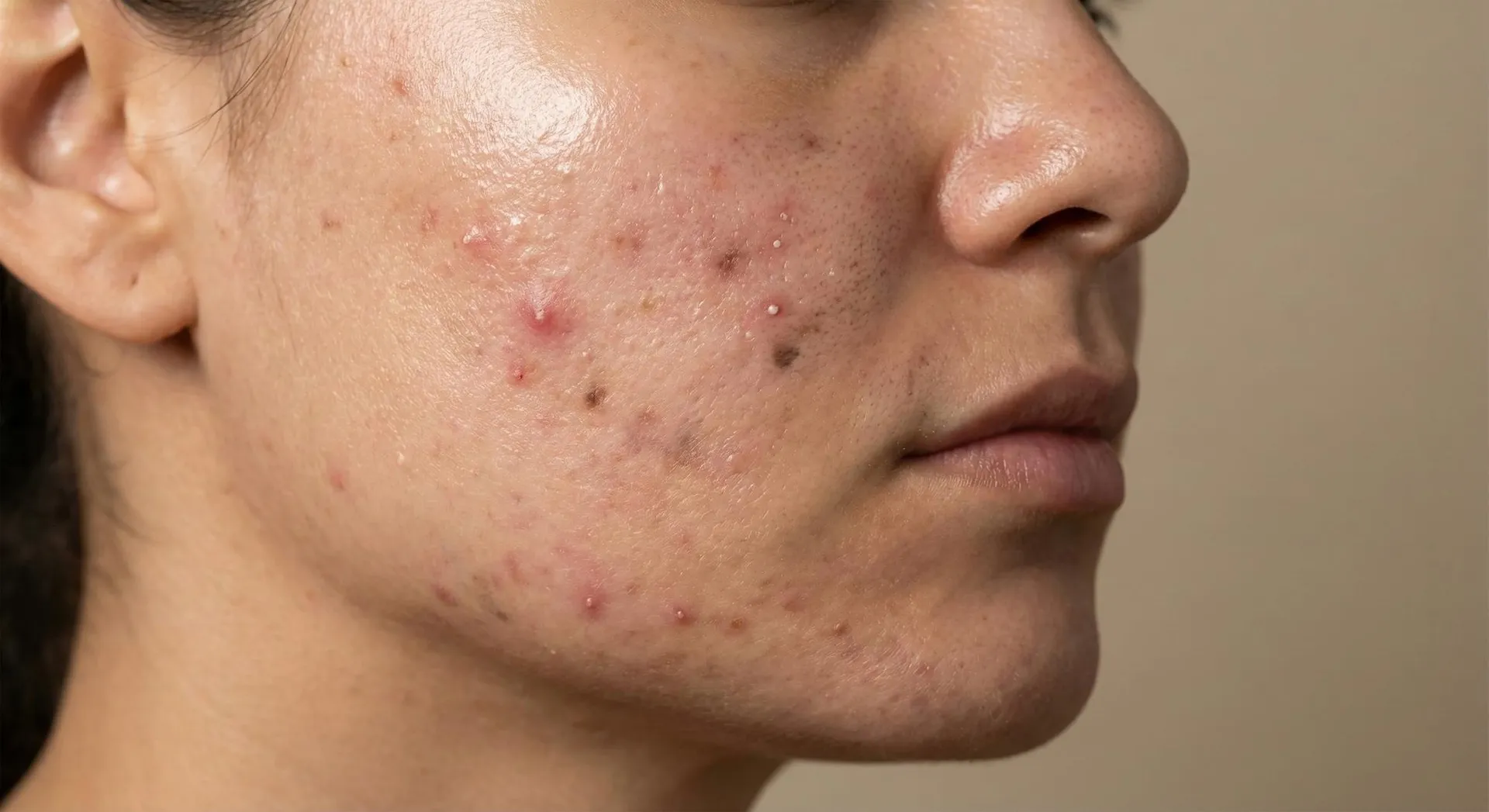
It may appear as:
- Blackheads
- Whiteheads
- Small inflammatory bumps
- Pus-filled lesions
- Deeper nodules
- Cysts
- A mixture of several lesion types
Treatment that works well for predominantly comedonal acne may not be enough for someone developing painful nodules.
This is why severity should not be judged only by the number of visible spots.
Marks and scars are different
One of the most common sources of confusion is describing every post-acne change as a scar.
Flat brown or red marks left after inflammation may gradually change with time and appropriate treatment. True acne scars involve alterations in skin texture, such as depressions or raised areas.
Scar treatments can include procedures selected according to scar type, but controlling active acne generally remains important. Performing cosmetic scar procedures while significant new acne continues can mean new scars are still forming.
Compare treatment options by the problem they solve
Topical treatments may target clogged pores, inflammation, or acne-related microorganisms. Oral medicines may be considered for certain moderate or severe cases or when other clinical factors are present.
Some patients may also require assessment for hormonal or medical contributors, particularly when acne occurs alongside relevant symptoms.
Procedures such as chemical peels may have a role in selected patients, but they should not automatically replace appropriate acne therapy.
A treatment plan may therefore have several objectives:
- Reduce active breakouts.
- Limit new lesions.
- Reduce the risk of scarring.
- Address marks once inflammation is controlled.
- Plan scar treatment when appropriate.
Common mistakes can make acne harder to manage
Frequently changing products is one of them.
Acne treatment usually requires time, and introducing several active ingredients at once can irritate the skin. Irritation may then be mistaken for worsening acne.
Other common problems include aggressively scrubbing oily skin, squeezing lesions, applying unsuitable steroid-containing creams, and copying prescription treatments from friends or social media.
Picking is particularly problematic because it can increase inflammation and contribute to marks or scarring.
Skincare still matters
A complicated routine is not necessarily better.
Many acne-prone patients benefit from a simple routine built around appropriate cleansing, non-comedogenic moisturisation, sun protection, and prescribed acne treatment.
Products should then be adjusted according to oiliness, dryness, sensitivity, and medications being used.
Pune's seasonal changes, heat, humidity, commuting, helmets, sweating, and outdoor exposure can also affect how comfortable a skincare routine feels. Practical adjustments may improve adherence without abandoning effective treatment.
When is professional assessment useful
Dermatology review should be considered when acne is persistent, painful, scarring, suddenly worsening, affecting the chest or back extensively, or not improving despite reasonable skincare.
At Keratis Clinic in Baner, patients can be assessed according to acne type, severity, previous treatments, skin sensitivity, and tendency to develop marks or scars.
Bringing the products currently used at home can be surprisingly useful. It allows the dermatologist to identify duplicate active ingredients or products that may be contributing to irritation.
The goal of acne care is not simply to dry every pimple as quickly as possible. A better approach is to control the acne process, protect the skin barrier, reduce avoidable scarring, and then address remaining marks or textural changes with treatments selected for the individual skin type.
Keywords